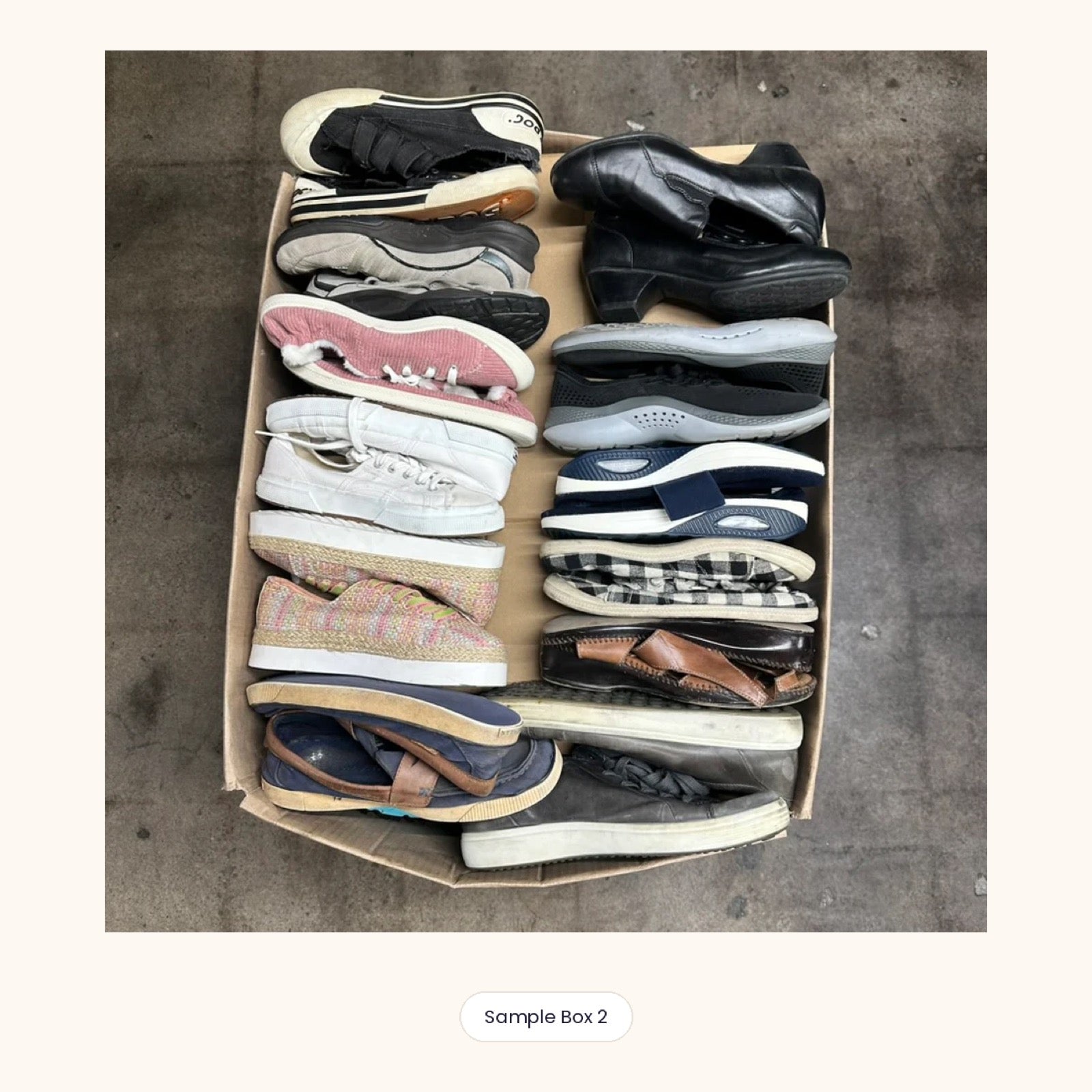
If you are serious about sneaker reselling, eBay is where your business lives. It has the largest active buyer base of any resale platform, accepts the widest range of sneaker brands and conditions, and gives sellers more control over pricing, presentation, and buyer relationships than any other marketplace.
Other platforms have their place. StockX and GOAT work well for premium deadstock pairs. Facebook Marketplace is useful for fee-free local sales. But for a reseller buying wholesale and moving volume across a mix of conditions and brands, eBay is the anchor. It is where consistent, scalable reselling happens.
This guide covers everything you need to know to sell sneakers on eBay effectively: how to set up your account, how to structure your listings, how to price competitively, how to handle the operational side of the business, and how to build the seller reputation that compounds your results over time.
Step 1: Set Up Your eBay Seller Account
If you do not have an eBay account yet, start at ebay.com and register. You can sell with a personal account, but if you are treating this as a business, setting up a business account from the start makes sense. It gives you access to business-specific tools, simplifies tax reporting, and signals professionalism to buyers.
When setting up your account, choose a username that is professional and easy to remember. Avoid usernames with random numbers or anything that looks like a throwaway account. Buyers do check seller profiles, and a clean, consistent username is a small but real trust signal.
Connect a payment method and verify your identity. eBay processes payments through eBay Managed Payments, which deposits directly to your linked bank account. Funds are typically available within one to three business days after a sale.
Before you list anything, spend time reviewing eBay's seller policies, particularly around condition descriptions, returns, and performance standards. Understanding the rules before you need them is much better than discovering them after a dispute.
Step 2: Understand eBay's Fee Structure
eBay fees are the most significant cost you will pay outside of inventory and shipping. Understanding them before you price is not optional — it is the difference between knowing your margins and guessing at them.
The primary fee is the final value fee, which is the percentage eBay takes from each completed sale. For most sneaker categories, this runs between 10 and 13 percent of the total sale amount including shipping. New sellers typically pay toward the higher end of that range. As your seller level improves, your rate may decrease.
eBay also charges a payment processing fee, which is included in the final value fee structure for most sellers using eBay Managed Payments.
Listing fees are generally not a concern for most resellers. eBay gives sellers a monthly allocation of free listings, typically 250 or more for most account types. Beyond that allocation, there is a small per-listing insertion fee, but most volume resellers stay within their free allocation or find the additional cost minimal relative to their sale volume.
The practical implication: on a $60 sale with a 12 percent final value fee, you are paying $7.20 to eBay. Add shipping costs if you are offering free shipping, and your true cost of the sale is $7.20 plus postage. Factor both into every pricing decision you make.
Step 3: Set Up Your Listing Template
A listing template is one of the most time-saving systems a reseller can build. Rather than writing every listing from scratch, you create a base structure that you populate with the specific details of each pair. This consistency also helps buyers, who learn what to expect from your listings and trust the format.
Your template should include the following sections in order:
Condition Description
Lead with an honest, specific statement of the condition. "These Hoka Bondi 8s are in good condition. The uppers are clean with no visible staining. The midsoles show light wear. The insoles are intact and have been deodorized." One to two sentences is enough. More is not always better here — specificity matters more than length.
Key Specifications
Brand, model, size, width if relevant, and gender. Even though these appear in your item specifics fields, restating them briefly in the description helps buyers who are skimming and catches anyone who might have the wrong listing pulled up.
Condition Details
This is where you get specific about any flaws. A scuff on the toe box, significant sole wear on one shoe, missing the original insole, a small tear in the lining. Every flaw gets mentioned. Every flaw gets photographed. Transparency here protects your seller rating.
What is Included
Laces, insoles, original box if applicable. If the box is not included, say so. Many buyers specifically want or do not want the original box, and knowing upfront reduces questions.
Policies
A brief statement on your shipping timeline and return policy. "Ships within two business days. Please see store policies for return details." Two sentences. Done.
Step 4: Write Titles That Get Found
Your listing title is your primary SEO tool on eBay. The algorithm matches buyer searches to listing titles, which means a weak title produces fewer impressions regardless of how good the rest of your listing is.
eBay gives you 80 characters. Use as many of them as possible with genuinely searchable terms. The structure that works consistently:
[Brand] + [Model Name] + [Gender] + [Size] + [Color] + [Condition]
Example: Nike Air Max 270 Men's Size 10 Black White Used Good Condition
Example: Brooks Ghost 15 Women's Running Shoe Size 8 Grey Used Like New
What to include: brand name, full model name (not just "running shoe"), gender, size, colorway or main color, condition. What to avoid: filler words, exclamation points, ALL CAPS, and vague descriptors like "nice" or "great deal" that no buyer is searching for.
The model name is the most important variable most new resellers underweight. "Nike running shoes size 10" surfaces in far fewer buyer searches than "Nike Air Pegasus 40 size 10." Spend 30 seconds confirming the exact model name before you write the title. That 30 seconds is worth more than an hour of other listing work.
Step 5: Take Photos That Convert
Buyers cannot inspect your sneakers in person. Your photos are doing the inspection for them. This is not a place to cut corners.
The non-negotiable angles for any used sneaker listing: lateral side (outside of the shoe), medial side (inside of the shoe), front toe box, heel, top-down, outsole, insole, and any flaws photographed specifically.
That is a minimum of eight photos. eBay allows up to 24. Use 10 to 12 for used pairs without hesitation.
Lighting matters more than the camera. Natural daylight from a window on an overcast day produces clean, accurate photos without harsh shadows. If you are shooting indoors without good natural light, a ring light or small lightbox solves the problem for under $30 and pays for itself quickly in faster sales and fewer returns.
Background should be neutral: white, grey, or light-colored foam board or paper. Nothing cluttered, nothing patterned, nothing that competes with the sneaker for attention.
Do not over-edit. Adjust brightness and contrast to match what you actually see, not to make the pair look better than it is. A buyer who receives a shoe that looks worse than the photos will leave a review that follows you.
Step 6: Price with Data, Not Intuition
Every pair you list should be priced based on what that exact shoe has recently sold for on eBay, not what you hope it will sell for, and not based on what other sellers currently have it listed at.
Use eBay's Sold Listings filter every time. Search the brand, model, size, and approximate condition. Filter by completed and sold. Look at the past 30 to 60 days of actual transactions. The price range those sales fall into is your market. Price within it or slightly below it to move inventory quickly.
A few factors that affect where within the range you should land:
Your seller rating relative to comparable sellers. A seller with 2,000 positive reviews can command the middle or top of the market range. A seller with 15 reviews is better served at the lower end until their reputation catches up.
Your photos and listing quality relative to comparable listings. If yours are significantly better than the competition, you have earned the right to match rather than undercut.
How quickly you need the capital to reinvest. A reseller who needs to turn a pack quickly prices at the low end and moves inventory fast. A reseller with more runway prices at mid-market and waits for the right buyer.
Enable Best Offer on all your listings. It adds no cost to you and captures buyers who are interested but want to negotiate. Set an auto-accept threshold at your minimum acceptable price and eBay handles negotiations automatically, even when you are not online.
Step 7: Handle Shipping Like a Professional
Shipping is where new resellers lose the most seller rating points. Late shipments, poor packaging, and inaccurate postage all create problems that hurt your reputation and cost you money.
Set your handling time to two to three business days. This gives you enough buffer to batch your shipping without falling out of compliance, and buyers are generally comfortable with this timeline. Communicate clearly in your listing so there are no surprises.
Weigh your packages before purchasing labels. A sneaker pair in a box typically runs between two and four pounds depending on the shoe size and box. An accurate weight prevents postage due situations, which create delays and irritate buyers.
USPS Priority Mail is the standard for most eBay sneaker shipments. It is fast, includes tracking, and eBay's partnership with USPS gives you discounted label rates when purchasing through the platform. For heavier pairs or larger boxes, compare Priority Mail and Ground Advantage to find the better rate.
Pack pairs securely. Sneakers that shift inside a box during shipping can arrive with creased toes or damaged uppers. Stuff the shoes with tissue paper or crumpled newspaper to maintain their shape. Use enough padding around the shoes in the outer box that they cannot move significantly. This costs pennies and prevents returns.
Photograph packages before you drop them off. A quick photo of the sealed, labeled box is documentation that protects you if a buyer claims non-receipt or damage.
Step 8: Manage Buyer Communication
Fast, professional communication is one of the simplest ways to improve your seller performance metrics and generate positive reviews. eBay's algorithm rewards sellers with high response rates and short response times.
Aim to respond to all buyer messages within 24 hours, ideally faster. Most questions are variations of the same few topics: condition details, shipping timeline, size fit, or offer negotiation. Build a set of brief template responses for each and personalize them slightly for each buyer. This takes seconds once the templates exist.
On offer negotiations: decide your floor before you start listing, not when an offer comes in. Knowing your minimum acceptable price means you can respond to offers immediately rather than sitting on them. eBay buyers who do not hear back on an offer within a day often move on to the next listing.
When something goes wrong, which it will at some point, address it quickly and without defensiveness. A buyer who receives a shoe that does not match the listing deserves a resolution, even if you believe the listing was accurate. A small partial refund or a return accepted gracefully costs less than the effect of a negative review on your long-term sales.
Step 9: Build Your Seller Reputation Deliberately
Your seller rating is the most valuable asset in your eBay business. It is what determines your visibility in search results, your pricing power relative to comparable listings, and your ability to resolve disputes in your favor when they arise.
New sellers operate at a disadvantage in all three of those areas. The path forward is volume and consistency. Complete sales, ship on time, describe conditions accurately, resolve issues gracefully, and request feedback from buyers. Over several months, a strong transaction history compounds into a seller profile that works for you rather than against you.
eBay's Top Rated Seller program is the benchmark to aim for. It requires meeting thresholds for transaction volume, defect rate, late shipment rate, and cases closed without seller resolution. Top Rated Sellers receive a badge visible on listings and search results, priority placement in search, and some fee discounts. Most importantly, buyers trust them more, which means higher conversion rates at similar or higher prices.
Why Wholesale Sourcing Makes eBay Selling Work
The most important thing eBay cannot give you is a low cost basis. That comes from how you source.
When your inventory costs $8 to $25 per pair through SneakerCycle's wholesale reseller packs, you have the margin flexibility to price competitively on eBay, absorb the 10 to 13 percent fee, cover shipping, and still profit meaningfully on every pair. Resellers sourcing at retail or near-retail do not have that flexibility, which is why they struggle to compete on price without destroying their margins.
SneakerCycle's packs include name-brand inventory from Nike, Adidas, Brooks, New Balance, Hoka, Asics, and more. These are the brands eBay buyers are actively searching for. That search demand is what generates the listing views that turn into sales.
- Shoe Reseller Pack: 50 pairs for $400 ($8/pair) — mixed sizes, brand names, casual, dress and more
- Silver Reseller Pack: 40 pairs for $400 ($10/pair) — top brands, athletic and lifestyle
- Gold Reseller Pack: 40 pairs for $640 ($16/pair) — top brands, athletic and lifestyle
- Platinum Reseller Pack: 40 pairs for $1,000 ($25/pair) — top brands, athletic and lifestyle
Free U.S. shipping on all packs. All reseller sales are final.
Shop Reseller Sneaker Packs Now
Frequently Asked Questions
How long does it take to start selling on eBay as a new seller?
New accounts have some initial selling limits that restrict how many items you can list or how much you can sell per month. These limits increase automatically as you complete sales and build transaction history. Most new resellers find their limits expand meaningfully within the first 30 to 60 days of active selling.
Should I offer free shipping or charge buyers for it?
Both approaches work. Free shipping tends to improve listing visibility in search results and appeals to buyers who comparison shop by total price. If you offer free shipping, build the shipping cost into your asking price. Charging for shipping gives you more pricing flexibility but can reduce clicks from buyers who filter for free shipping. For most volume resellers, free shipping with the cost baked in is the cleaner approach.
What is eBay's return policy and do I have to accept returns?
You set your own return policy within eBay's framework. Accepting returns makes your listings more attractive to buyers and improves your visibility in search. If you accept returns, eBay's Money Back Guarantee protects buyers, meaning they can return items that are significantly not as described regardless of your stated policy. Being accurate in your condition descriptions is the best defense against returns.
How do I handle a buyer who claims a pair arrived damaged?
Ask for photos of the damage before taking any action. Compare them to your pre-shipment photos. If the damage occurred during shipping, file a claim with the carrier. If the buyer's claim seems inconsistent with your photos or listing, you can dispute through eBay's resolution center. If the issue is legitimate, resolve it promptly. A refund or partial refund costs less than a negative review affects your long-term sales.